Ceratonia siliqua L.
A Mediterranean tree with high agricultural and economic potential
| Characteristic | Description |
|---|---|
| Origin of the species: | Mediterranean Basin |
| Scientific name: | Ceratonia siliqua L. |
| Family: | Fabaceae |
| Type: | Mediterranean fruit tree with evergreen foliage |
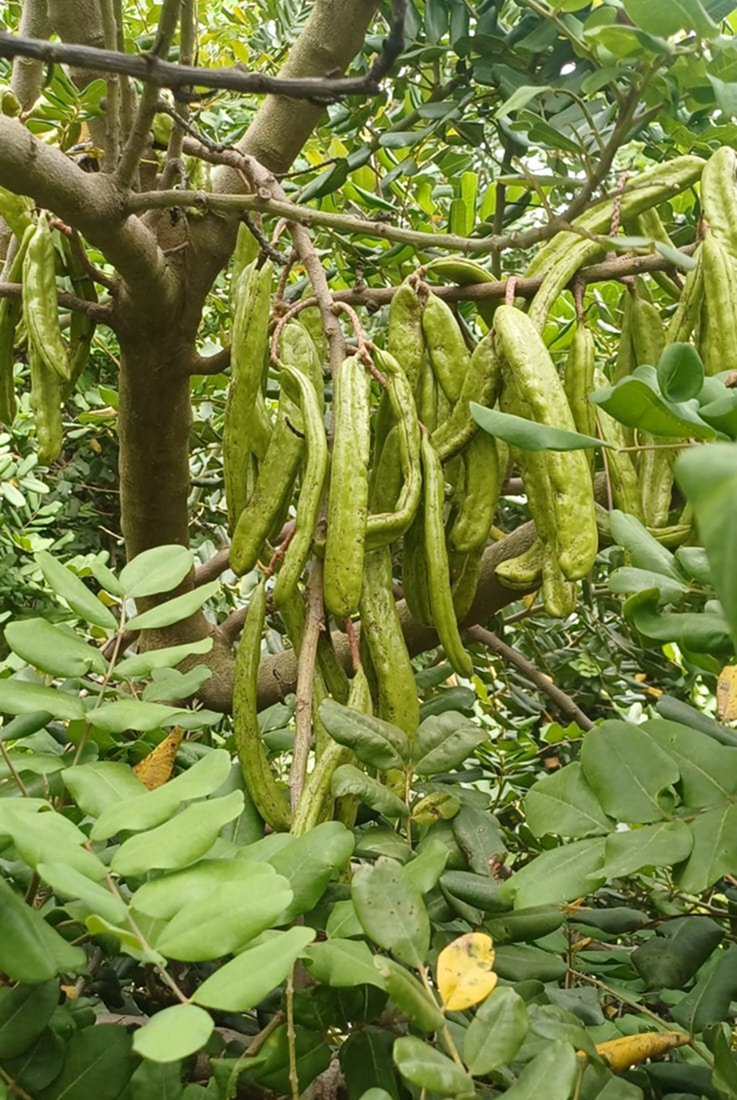
| Fruit: | Elongated, fleshy pod rich in sugars |
| Fruit color: | Green, then dark brown to black at maturity |
| Uses: | Human food, animal feed, and agri-food processing |
| Flowering: | Varies according to the variety and climatic conditions |
| Harvest: | Generally in late summer and autumn, depending on the variety and region |
| Fertility: | Depends on the type of planting material: male, female, or hermaphroditic |
| Pollination: | The presence of suitable pollinators may be necessary depending on the variety |
| Climate adaptation: | Very good adaptation to Mediterranean conditions |
| Drought resistance: | Good to very good once the tree is established |
| Soil: | Adaptable to different soil types, preferably well-drained soils |
| Exposure: | Full sun |
| Growth: | Progressive, with good adaptation under favorable conditions |
| Production: | Interesting long-term production potential |
| Yield: | High potential with appropriate crop management |
| Longevity: | Long-lived tree |
Key strengths
- Excellent adaptation to the Mediterranean climate
- Good drought tolerance
- Evergreen foliage
- Adapted to different soil types
- Sugar-rich and valuable fruit
- Numerous agri-food processing opportunities
- Species with interesting economic potential
- Sustainable tree suitable for long-term agricultural projects